A rug is part object, part architecture. Before color or pattern, ask how it was made, how it will live, and whether its proportions belong to your room. These are the 21 questions we use to move from admiration to a confident choice.
01 · Room and size
Begin with the room, not the rug
1. Where will the rug live?
Name the room and the exact zone before you shop. A living-room rug usually needs to connect a seating group; a bedroom rug should make the first step out of bed comfortable; a dining rug must remain under the chairs when they are pulled back. In an open plan, the rug defines a boundary. The same beautiful piece can feel inevitable in one setting and undersized in another.
2. What size does the furniture layout require?
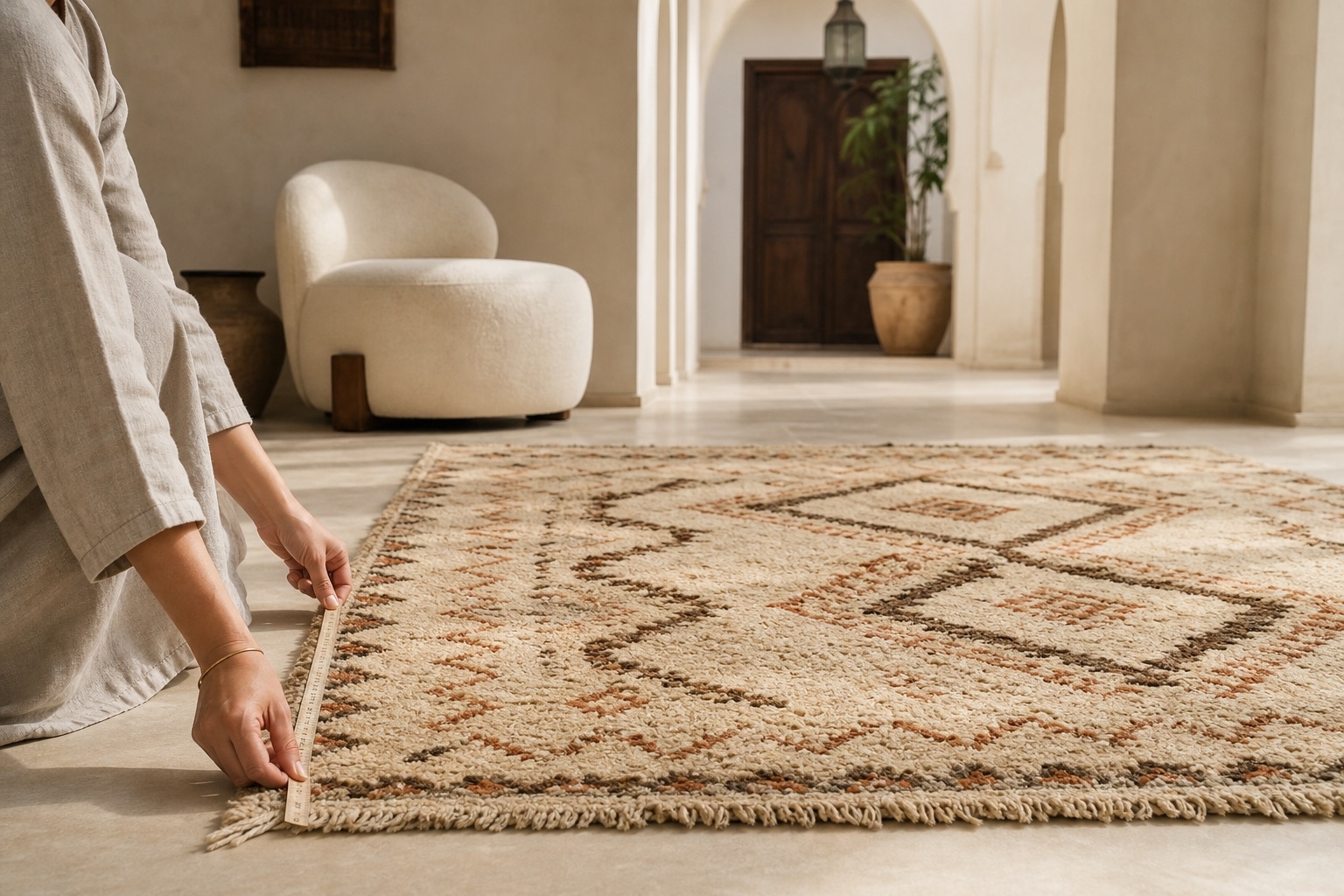
Measure the furniture arrangement rather than the empty floor. In a living room, aim for at least the front legs of the sofa and chairs to meet the rug. In a dining room, include chair movement. In a bedroom, decide whether the rug will sit fully under the bed or begin below the nightstands. Our room-by-room rug size guide gives exact layouts and a five-minute measuring method.
3. Can I see the dimensions in my room before ordering?
Yes—and you should. Mark the rug’s full outline with low-tack painter’s tape. Walk the routes you use every day, open nearby doors, pull dining chairs back, and look from the room’s entrance. Leave the outline in place for a day. This simple test reveals proportion more reliably than trying to imagine a measurement from a product page.
4. Should all furniture legs sit on the rug?
Not always. All legs on creates a generous, unified zone in a large room. Front legs on works well in many standard living rooms. A small rug floating under only a coffee table can work in a compact conversation area, but it often makes a larger room feel fragmented. Consistency matters more than one universal rule.
5. How much bare floor should remain?
A visible border helps a rug feel intentional, but the familiar 18-inch rule is only a starting point. Smaller rooms may need less; generous rooms can hold more. Keep the border visually even where possible and prioritize a strong relationship with the furniture. If choosing between two sizes, the larger option usually anchors the room more convincingly.
02 · Material and making
Understand what you will touch every day
6. What is the rug made from?
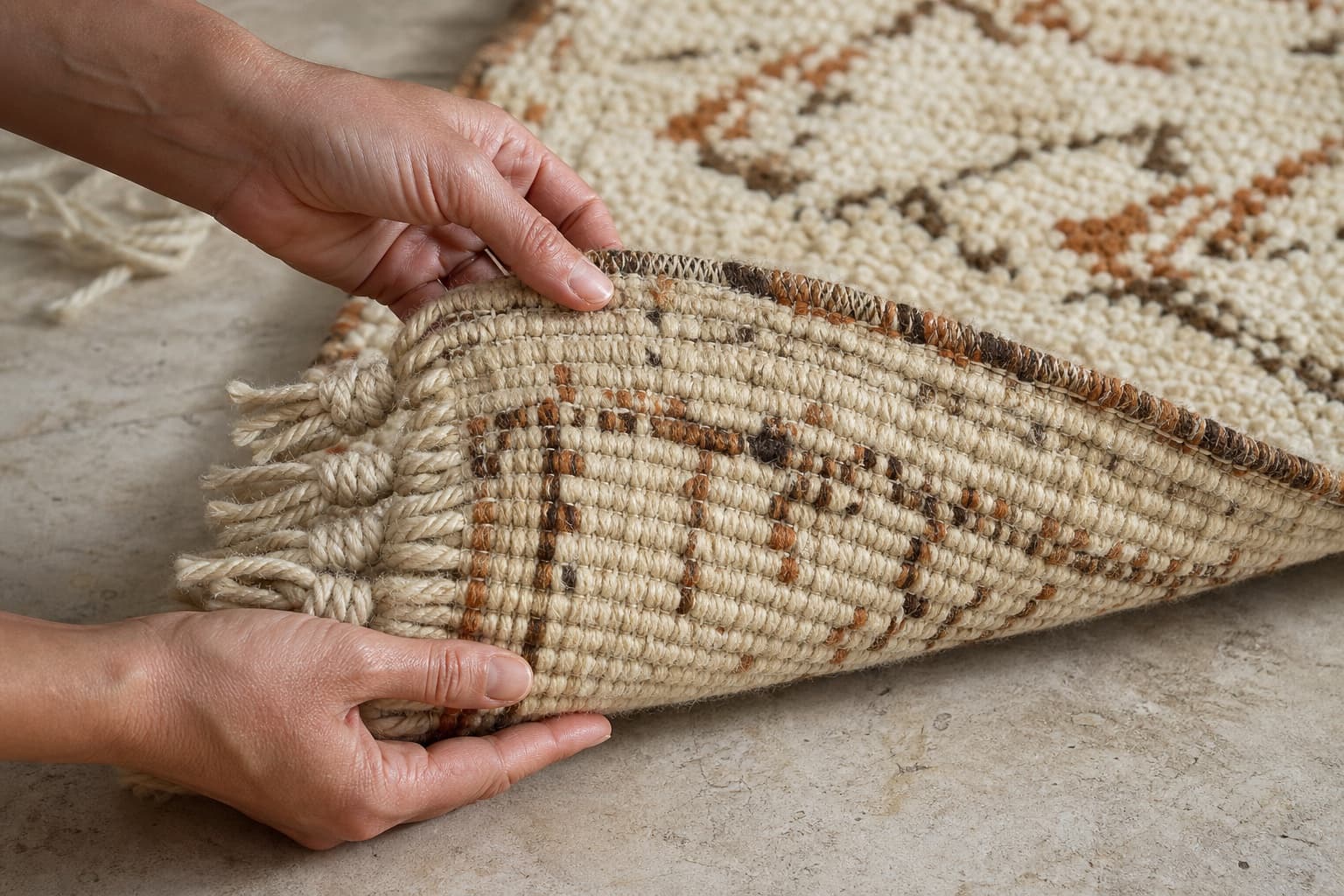
Ask for the pile, foundation, and any backing—not only the headline material. Wool is valued for resilience, warmth, and the way it ages. Cotton may appear in a foundation; plant fibers produce a firmer, drier handle; synthetics can offer stain resistance at a different price and feel. Every LEOS piece states its natural wool construction on the product page so the material is not left to assumption.
7. Is wool the right material for my home?
Wool is a strong all-round choice for living rooms, bedrooms, and other regularly used interiors. Its fibers recover well from compression and feel warm without looking glossy. It does require appropriate vacuuming and prompt attention to spills. If you want a rug that can be put in a household washing machine, a handmade high-pile wool rug is not the right category; choose a purpose-built washable construction instead.
8. Is it hand-knotted, handwoven, hand-tufted, or machine-made?
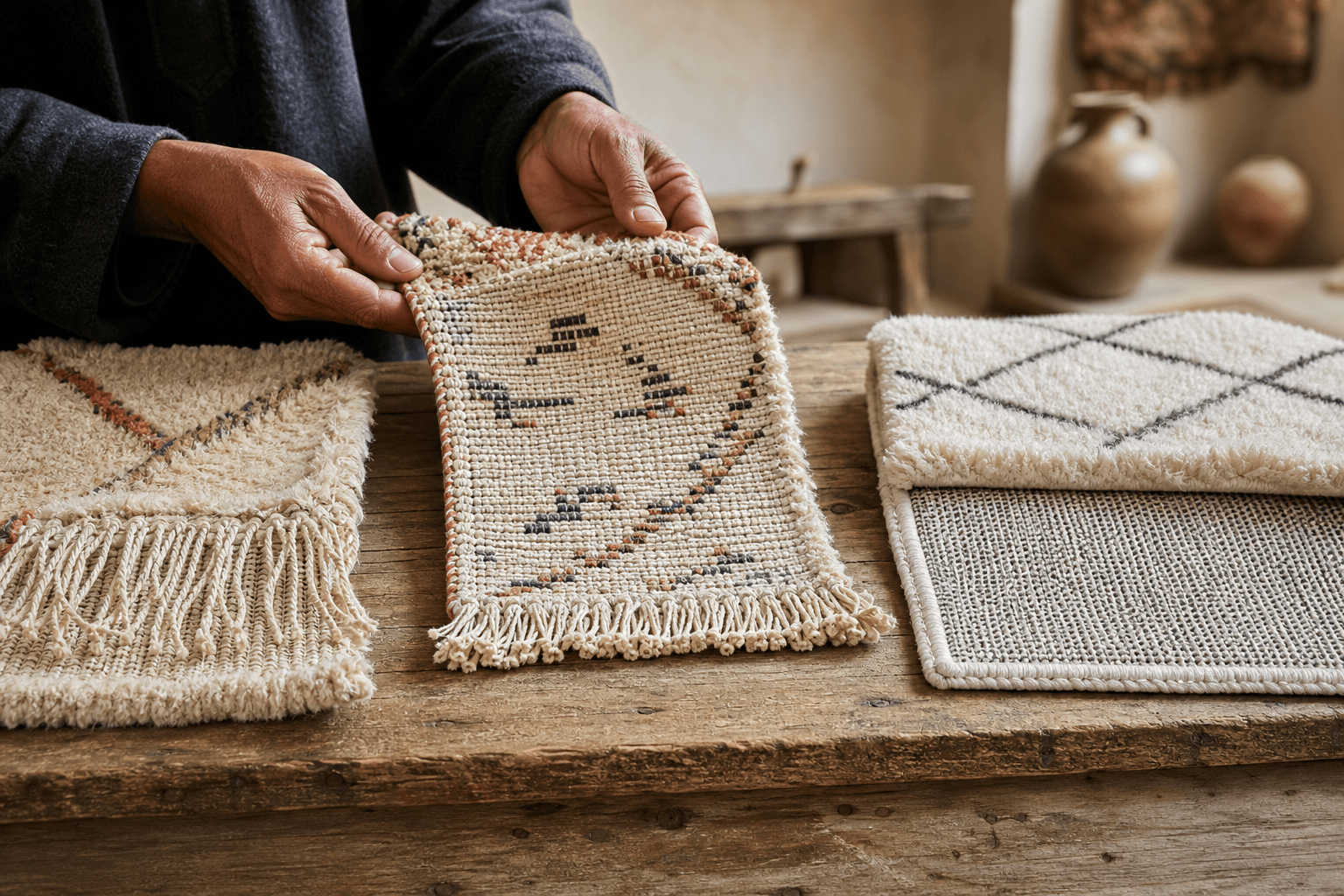
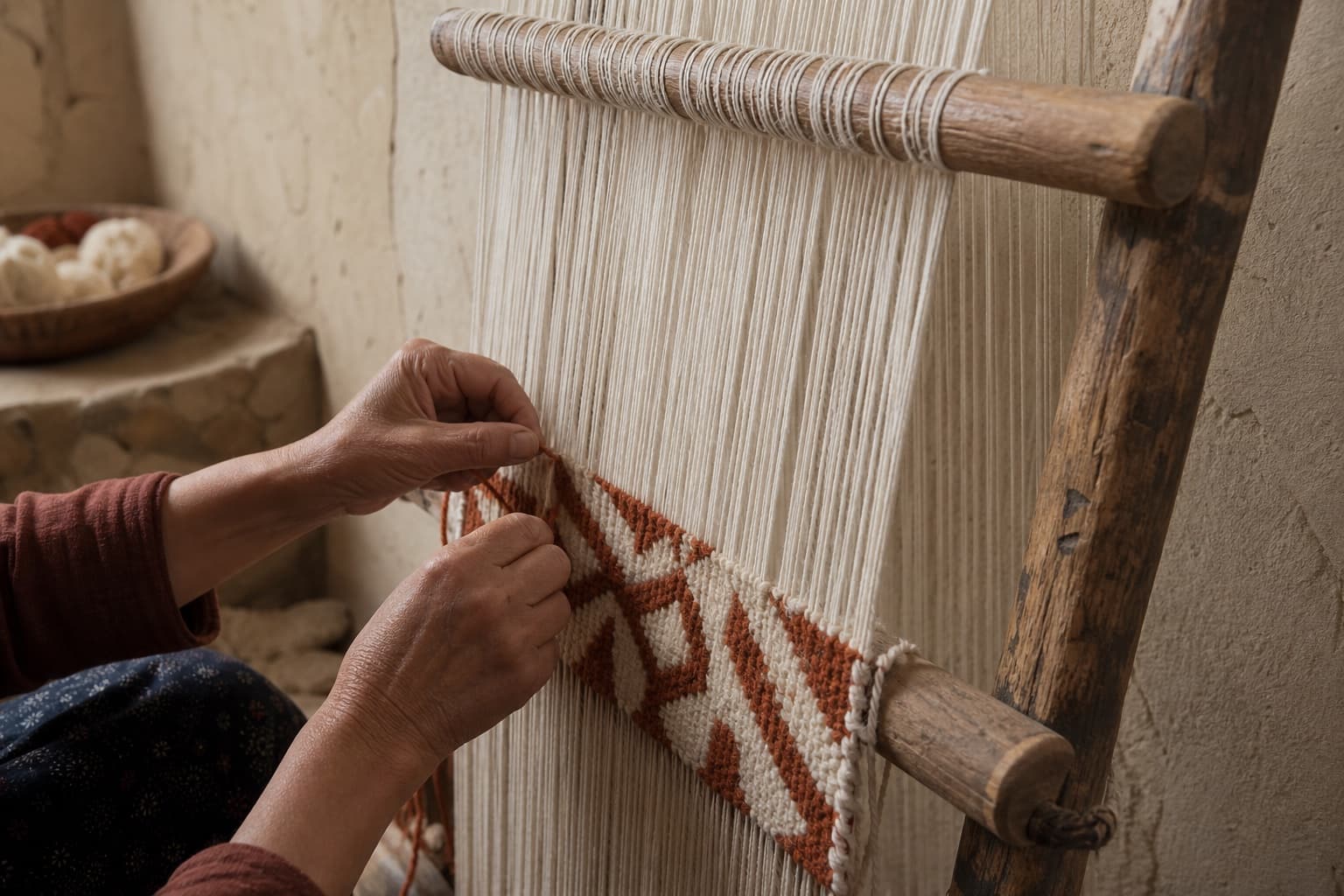
These terms describe different constructions and should not be treated as synonyms. Hand-knotting builds the pile knot by knot on the foundation. Flatweaving interlaces yarn without a raised knotted pile. Hand-tufting pushes yarn through a backing and commonly uses adhesive to secure it. Machine-made rugs are mechanically produced. None should be disguised as another: the construction influences touch, longevity, repair, and price.
9. What pile height suits the room?
High pile feels generous and changes beautifully with light, but it asks for more thoughtful vacuuming and door clearance. Low pile is easier beneath dining chairs and in busy paths. Flatweaves are compact and often benefit most from a grippy rug pad. Match pile to use: the most luxurious surface is only useful if it works with the way the room moves.
10. Are slight irregularities a problem?
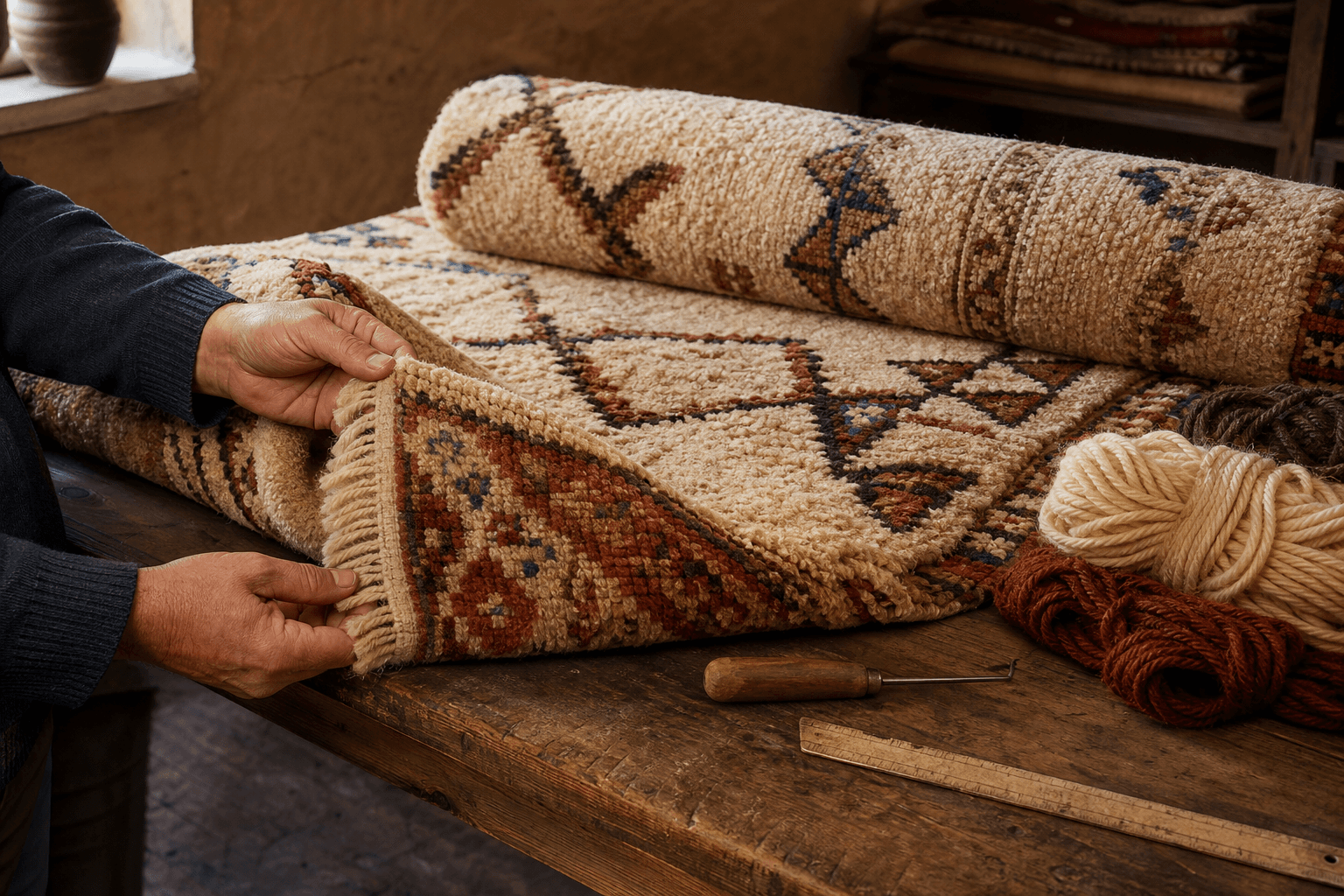
In a genuinely handmade rug, small shifts in line, symmetry, tone, and edge are records of the maker’s hand. They should feel coherent with the whole object, not like damage. Examine close photographs of the pile, border, fringe, and reverse. LEOS treats these variations as part of each one-of-one piece rather than digitally correcting them away.
03 · Origin and quality
Ask for specificity, not atmosphere
11. What makes a rug authentically Moroccan?
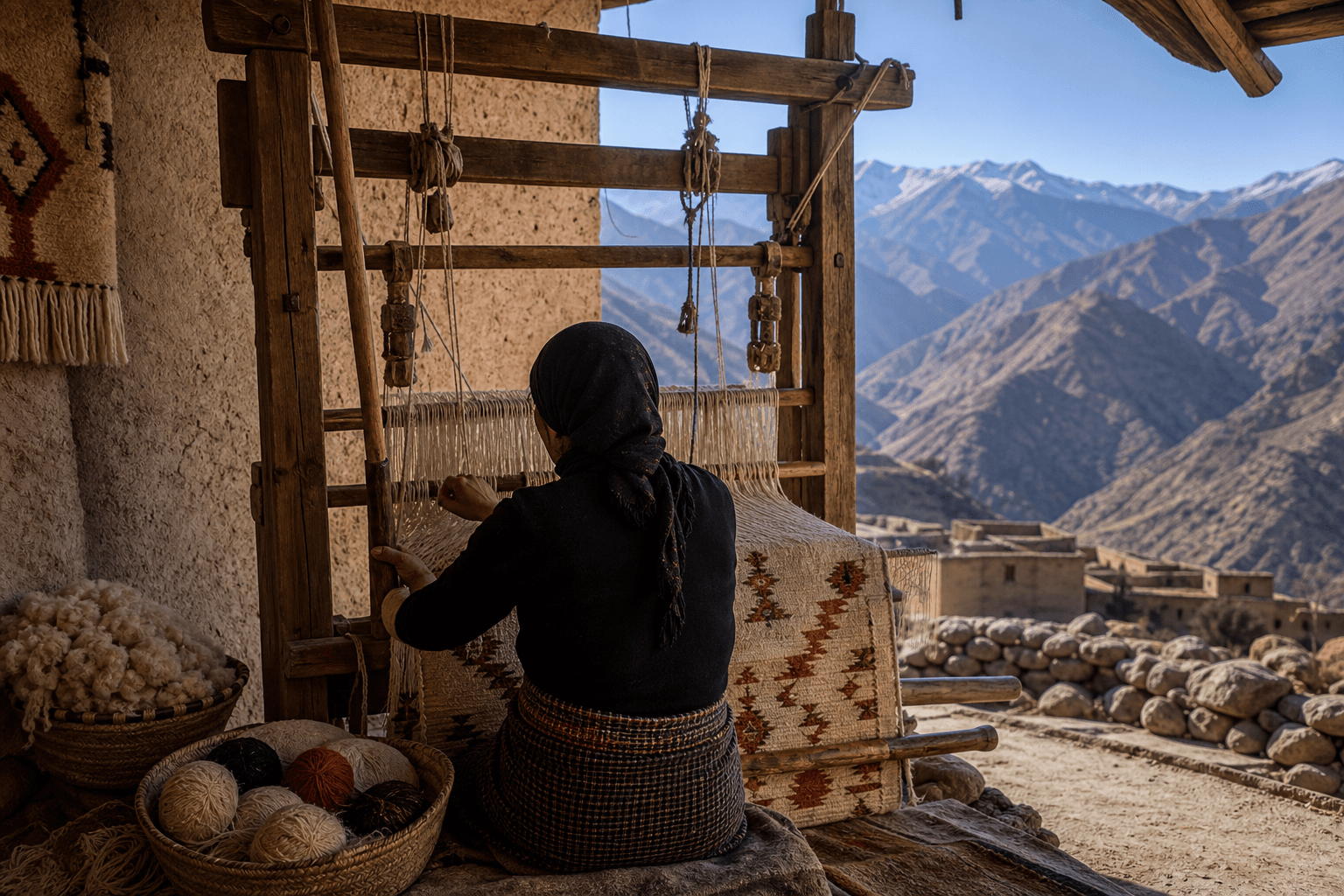
Moroccan describes origin and a wide family of regional weaving traditions—not simply a cream ground with diamonds. A seller should be able to state where the rug was made, its material, and its method of construction. “Moroccan style” may honestly describe a visual influence, but it is not the same claim as handmade in Morocco. For further context, the Moroccan rug overview from Rugs Directexplains why origin, technique, and regional variation matter.
12. Can the seller explain its provenance?
Look for a country of origin, the making technique, the material, and a clear description of whether the piece is new, vintage, or antique. Named regions and communities should be used carefully and only when documented. Each LEOS object is made in Morocco and accompanied by a certificate of origin; the product record also identifies its dimensions, palette, material, and place within the Atlas collection.
13. How can I judge quality online?
Request or inspect full-front, detail, edge, fringe, reverse, and room photographs. Read the measurements in both centimeters and feet. Look for material and construction stated in plain language, not only romantic copy. Zoom into transitions between colors and the way the pile meets the edge. Quality is easier to assess when a seller shows the object under more than one light and from more than one distance.
14. Does knot count determine quality?
Knot density is one technical clue, not a universal grade. A fine, intricate carpet may rely on a high count; a bold, high-pile Atlas rug expresses quality through wool, structure, handle, and a different weaving language. Judge a piece within its tradition and intended use. A single number cannot tell you whether the wool feels alive, the structure is sound, or the design holds a room.
15. Are the colors natural or synthetic dyes?
Ask, and expect a precise answer. Both natural and modern dyes can produce beautiful, stable color when properly handled. The concern is transparency and colorfastness, not a simplistic assumption that one label guarantees quality. Tonal movement can come from handspun wool, dye variation, age, or light; it should be represented accurately in the photographs.
04 · Daily life and care
Choose for the life already happening
16. Will a new wool rug shed?
Some loose fiber is normal at first, especially with a plush new wool pile. It should lessen with calm, regular care. Avoid pulling individual fibers; trim a clearly loose end level with the surface. Aggressive suction or a rotating beater brush can make shedding worse. Persistent heavy fiber loss, bald areas, or powder from the backing deserves professional assessment.
17. Can I vacuum and spot-clean it?
Usually, yes—with the right method. Use suction without a beater bar, work in the direction of the pile, and treat fringes by hand rather than drawing them into the vacuum. Blot a spill; do not scrub it deeper into the fibers. Because dyes and constructions vary, test any treatment in an inconspicuous place and follow the seller’s care instructions. See our complete handmade wool rug care guide before the first clean.
18. Do I need a rug pad?
In most rooms, yes. A well-chosen pad reduces movement, adds support, and limits abrasive grit between the rug and floor. It should be slightly smaller than the rug so it remains invisible. Confirm that its material is compatible with your specific floor finish. Revival’s rug pad explaineralso notes the value of floor protection, grip, and noise reduction.
19. Is the rug right for children, pets, or heavy traffic?
Start with realistic maintenance. Wool can serve active homes well, but a pale high pile will show debris sooner than a mottled, lower-profile surface. Keep claws trimmed, address accidents promptly, and place a pad beneath the rug. For a frequently spilled-on playroom, a purpose-built washable rug may be more practical. For a living room where repairability, feel, and longevity matter, wool remains a compelling choice.
05 · Price and purchase
Know what the price includes
20. Why do handmade rugs cost more?
Price reflects dimensions, wool quality and quantity, construction, labor, design, condition, rarity, finishing, and the path from maker to room. Two rugs of the same size can require very different amounts of time and material. Ask what is included—insured delivery, duties, a pad, certification, or returns—then compare like with like rather than using size alone.
21. What should I confirm before checkout?
Confirm the exact dimensions, material, construction, color representation, condition, country of origin, care method, delivery window, duties, return terms, and what happens if the piece is damaged in transit. Save the product record and photograph the parcel as it arrives. A confident seller makes these facts easy to find and gives you enough visual evidence to decide without pressure.
The short version