Wool responds best to a light, regular routine: prevent grit, vacuum gently, blot spills, rotate the piece, and leave full washing to a specialist who understands wool and dyes.
Quick answer
Can you vacuum a handmade wool rug?
Yes. Use suction only or switch off the rotating beater bar, lower the power when possible, follow the direction of the pile, and clean fringe separately by hand.01 · Weekly care
How often should a wool rug be vacuumed?
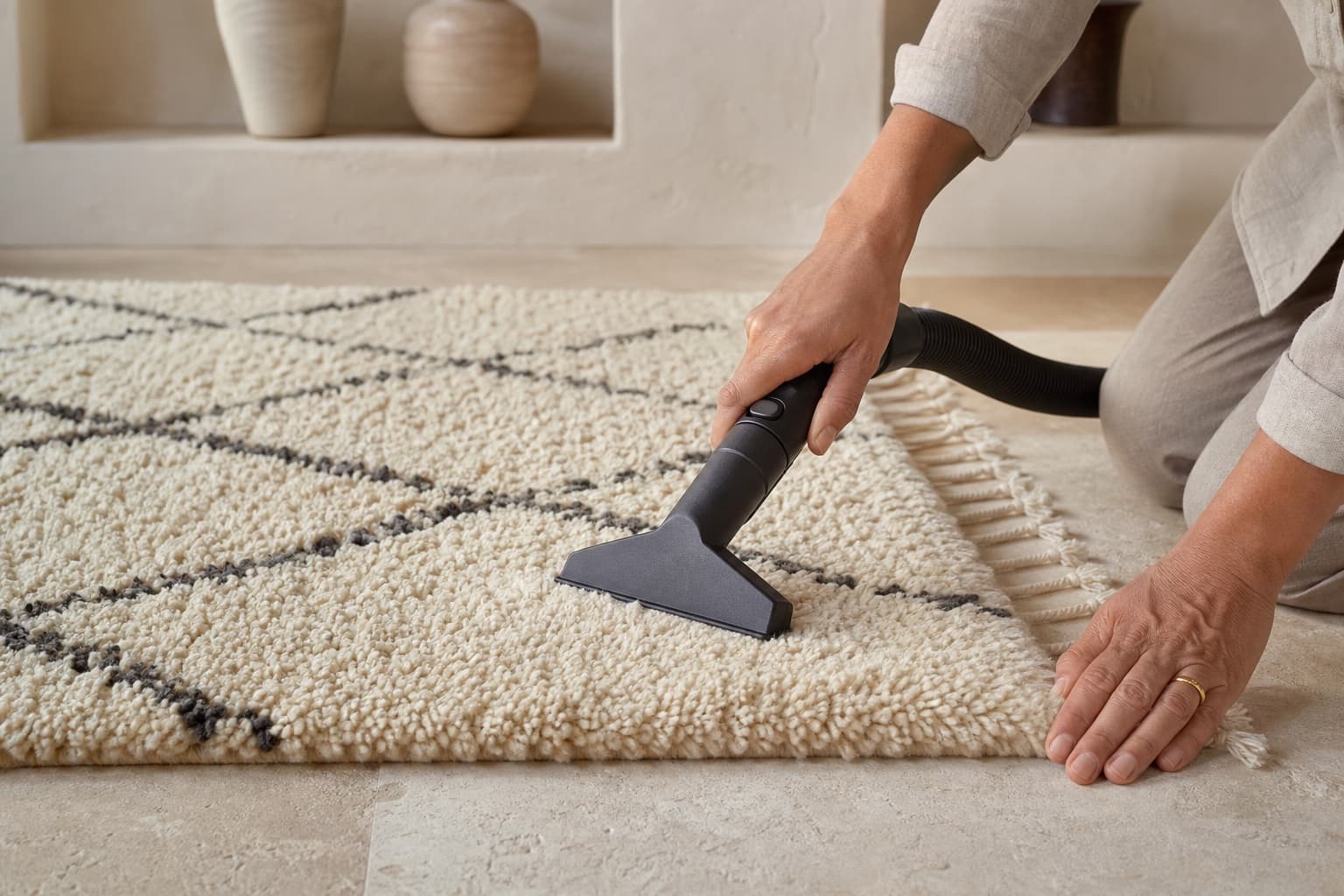
Vacuum according to use rather than a rigid calendar. A living-room rug may need a light pass weekly; a quiet bedroom piece may need less. Grit is the real concern because it works down into the pile and abrades fibers underfoot. Use controlled suction, move slowly, and avoid repeated passes over the fringe. Vacuum the floor and rug pad when you rotate the piece.
Which direction should I vacuum?
Run your hand across the surface. One direction feels smooth and lays the pile down; work with that direction. Do not force a heavy vacuum over a plush surface. If the machine seals itself to the rug, reduce suction or raise the head. A handheld upholstery tool can give better control on small or particularly soft areas.
Should I beat or shake the rug?
A small, structurally sound rug may be gently shaken outdoors with help, but avoid harsh beating, folding, or hanging a heavy wet rug from one edge. Large handmade pieces are difficult to support evenly. Routine suction and professional washing are safer than dramatic home-cleaning methods.
02 · Spills
What should I do immediately after a spill?
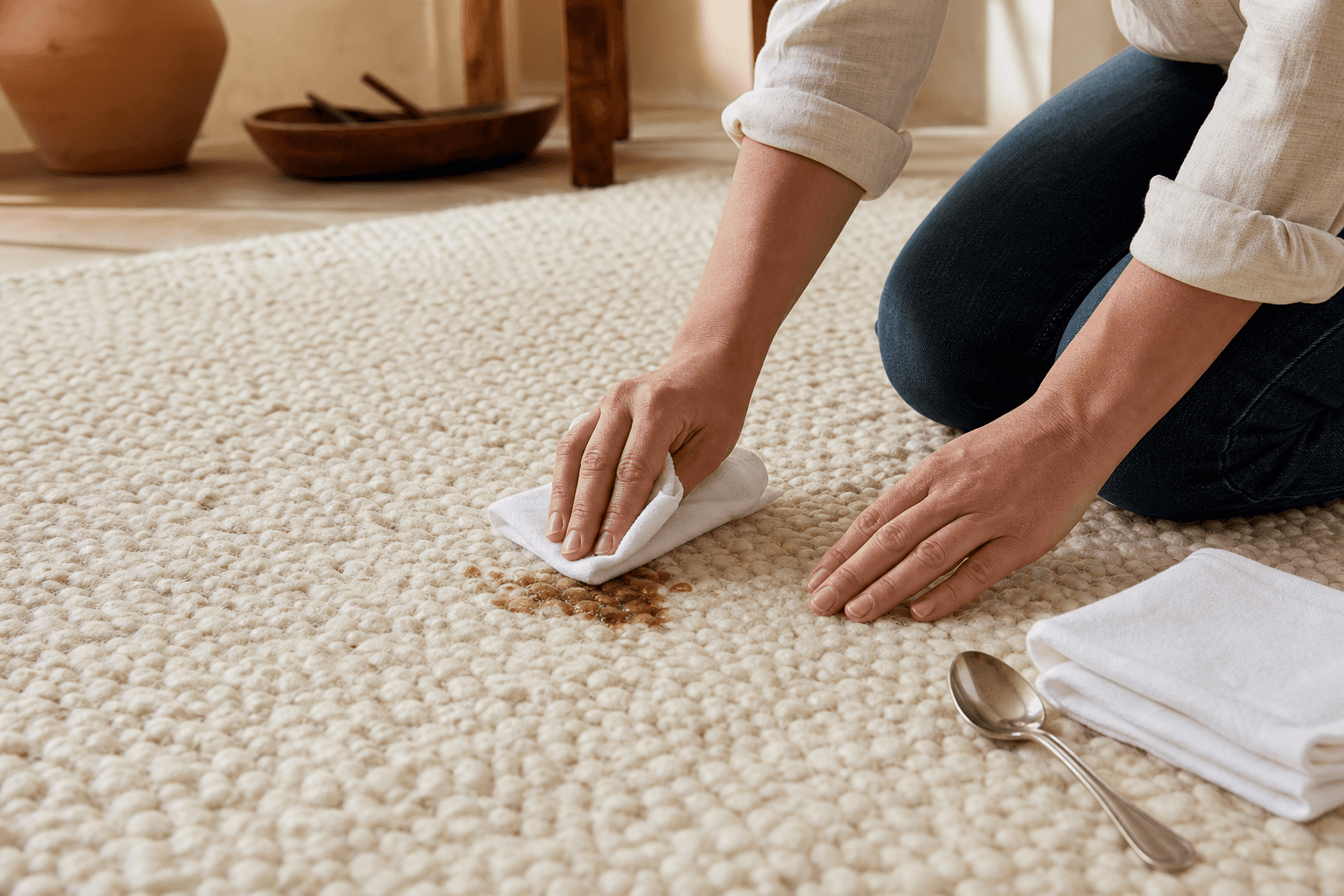
- Remove solids.Lift them with a spoon or dull edge; do not press them into the pile.
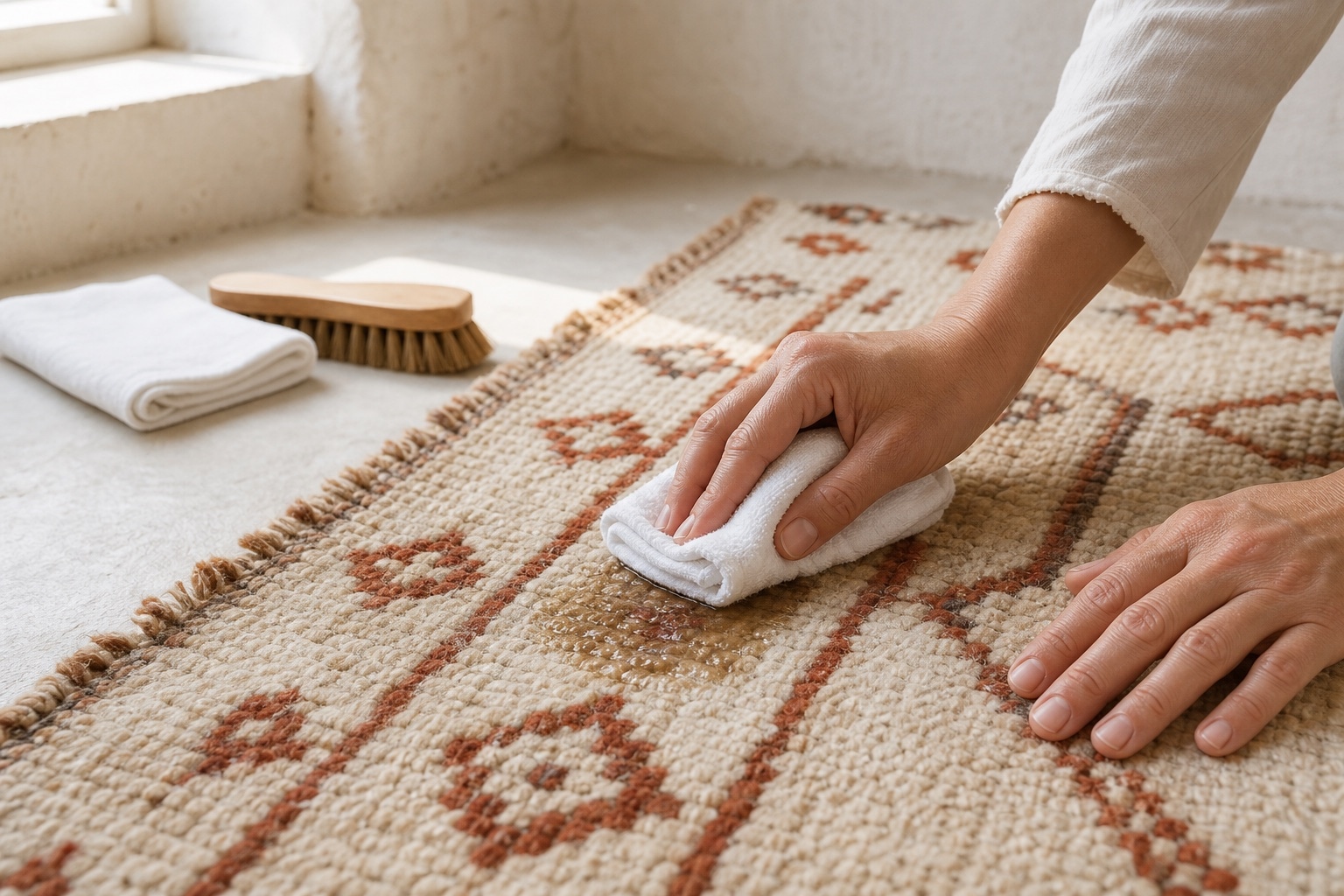
- Blot moisture.Use clean, absorbent white cloths and work from the outside toward the center.
- Avoid scrubbing.Friction spreads the spill and can distort or fuzz the wool.
- Use little liquid.Do not saturate the foundation or apply an untested household cleaner.
- Call early.For dye, oil, pet accidents, or a large spill, contact a qualified rug cleaner promptly.
Test any care product in a hidden area and follow the instructions supplied with the specific rug. WoolSafe maintains consumer guidance and directories for wool carpet and rug care specialists. Professional advice is especially valuable when you do not know the dyes or previous treatments.
Can I use baking soda, vinegar, bleach, or a carpet machine?
Do not assume a popular household method is safe for a handmade wool rug. Bleach can remove color and damage fibers. Powders can become difficult to extract from a deep pile. Excess liquid from a rental machine can affect dyes, backing, and drying. The correct treatment depends on the spill, construction, and dye stability; when uncertain, blot and seek specialist advice.
03 · Shedding and wear
Is shedding normal in a new wool rug?
A modest amount of loose fiber can be normal in the early life of a plush wool rug. Vacuum gently and give the surface time to settle. Do not pull a protruding yarn; trim a genuinely loose end level with the surrounding pile using clean scissors. Shedding should gradually reduce. Sudden bald spots, exposed foundation, or continued heavy fiber loss are not routine and should be documented for the seller or a rug specialist.
How do I prevent uneven wear and fading?
Rotate the rug 180 degrees every three to six months, especially when one end receives more foot traffic or sunlight. Use window coverings during intense direct sun and move furniture slightly when possible so the same fibers are not always compressed. Never drag heavy furniture across the pile; lift it and use protective glides suited to the rug and floor.
Can furniture leave dents?
Yes, particularly in a high pile. A dense, supportive rug pad and wide furniture cups can spread the load. Move the furniture a small distance periodically. Some wool fibers recover after the weight is removed and the area is gently groomed by hand, but deep long-term compression may remain part of the rug’s history.
04 · Pads, pets, and floors
Does a handmade wool rug need a pad?
A pad is usually worthwhile. It limits slipping, cushions the structure, and reduces the grinding action of dirt between rug and floor. Choose a pad slightly smaller than the rug so the edges slope naturally and the pad stays hidden. Check compatibility with hardwood, stone, or heated floors; cheap sticky mesh products can mark certain finishes.
How should I handle pet accidents?
Act quickly. Lift solids, blot liquid with white towels, and avoid flooding the area. Odor can remain below the visible pile, so repeated accidents or urine that reaches the foundation usually need a professional rug washer rather than perfume or surface spray. Keep claws trimmed and place a pad beneath the rug to reduce movement during play.
Can I place wool on a heated floor?
Confirm with both the flooring and heating-system manufacturers. A thick rug and pad add thermal resistance and may affect performance or allowed surface temperature. Ensure the floor is fully cured, dry, and compatible with the chosen pad. Never trap moisture beneath the rug.
05 · Deep cleaning and storage
When should a wool rug be professionally cleaned?
There is no useful one-size schedule. Consider professional washing when soil remains after careful vacuuming, odors persist, the rug has suffered a significant spill, or years of use have dulled the pile. Choose a cleaner experienced with loose-laid handmade wool rugs—not simply wall-to-wall carpet—and tell them everything you know about the rug’s origin, dyes, construction, stains, and previous treatments.
How do I store a wool rug?
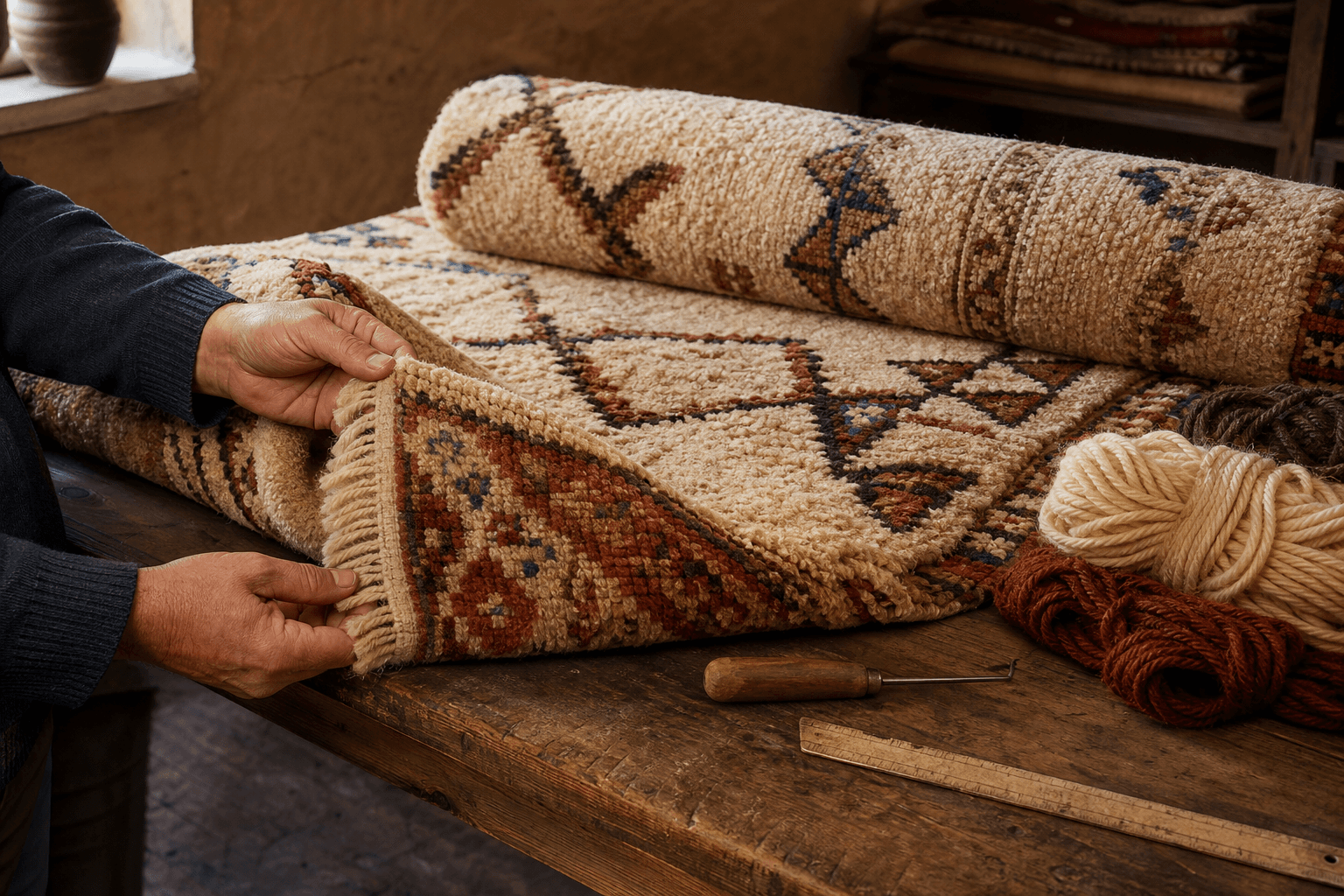
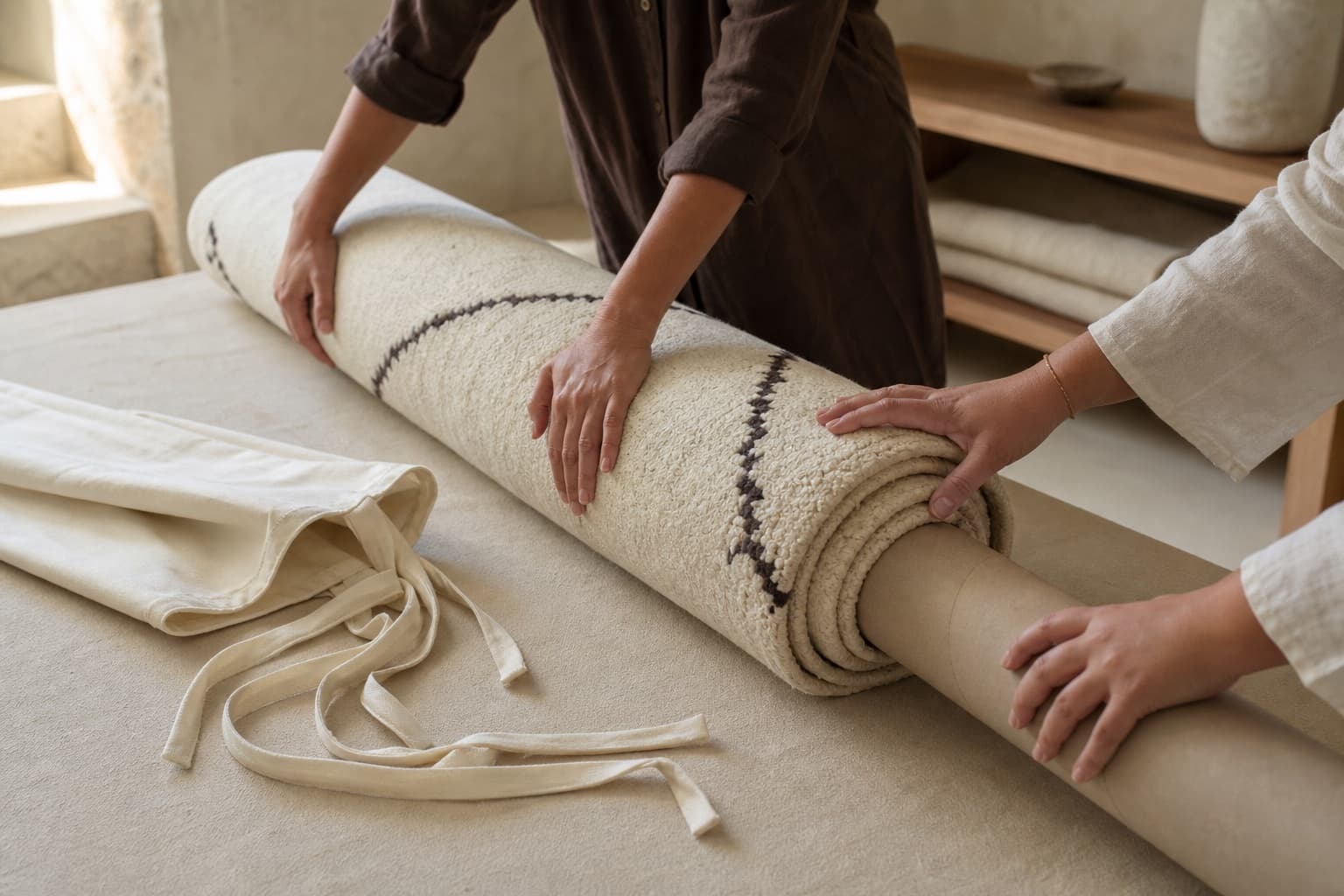
Have it clean and completely dry first. Roll it with the pile protected; do not create hard folds. Use breathable protective wrapping rather than sealing residual moisture inside plastic. Store it off the floor in a cool, dry, climate-stable place, inspect it periodically, and follow professional guidance for moth prevention appropriate to your region.
What care details should I ask before buying?
Ask whether the rug can be vacuumed, which attachments to use, whether its dyes require special handling, what type of pad is recommended, and who should perform a full wash. Request the advice in writing. Care is one of the essential checks in our handmade Moroccan rug buyer’s guide, alongside origin, construction, size, delivery, and returns.
The care principle