A handmade wool rug is worth it when you value natural material, tactile variation, documented origin, specialist repair, and an object you intend to keep. It is not automatically the best choice for every budget or household. If machine washing, exact repeatability, very low maintenance, or easy replacement is the priority, another construction may be more practical.
A balanced verdict
Worth is use divided by compromise.
The price only makes sense when the rug fits the room, survives the household’s real routine, can be cared for correctly, and provides material or emotional value you cannot obtain from a more replaceable product.01 · Price
What does the price of a handmade rug pay for?
The cost begins before weaving: wool must be sourced, prepared, spun or specified, colored, and organized. A loom is dressed with a stable foundation. The design then develops through repeated hand decisions about tension, line, pile, and finishing. Selection, washing, photography, storage, freight, duties, service, and the seller’s margin also sit inside the retail price. Ask which of those stages the seller can actually explain.
Handmade does not excuse opacity. Request fiber content, construction, origin, dimensions, condition, care, return terms, and the exact object shown. A high price without evidence is not provenance. Our price and purchase checklist separates what should be documented from what is simply atmosphere.
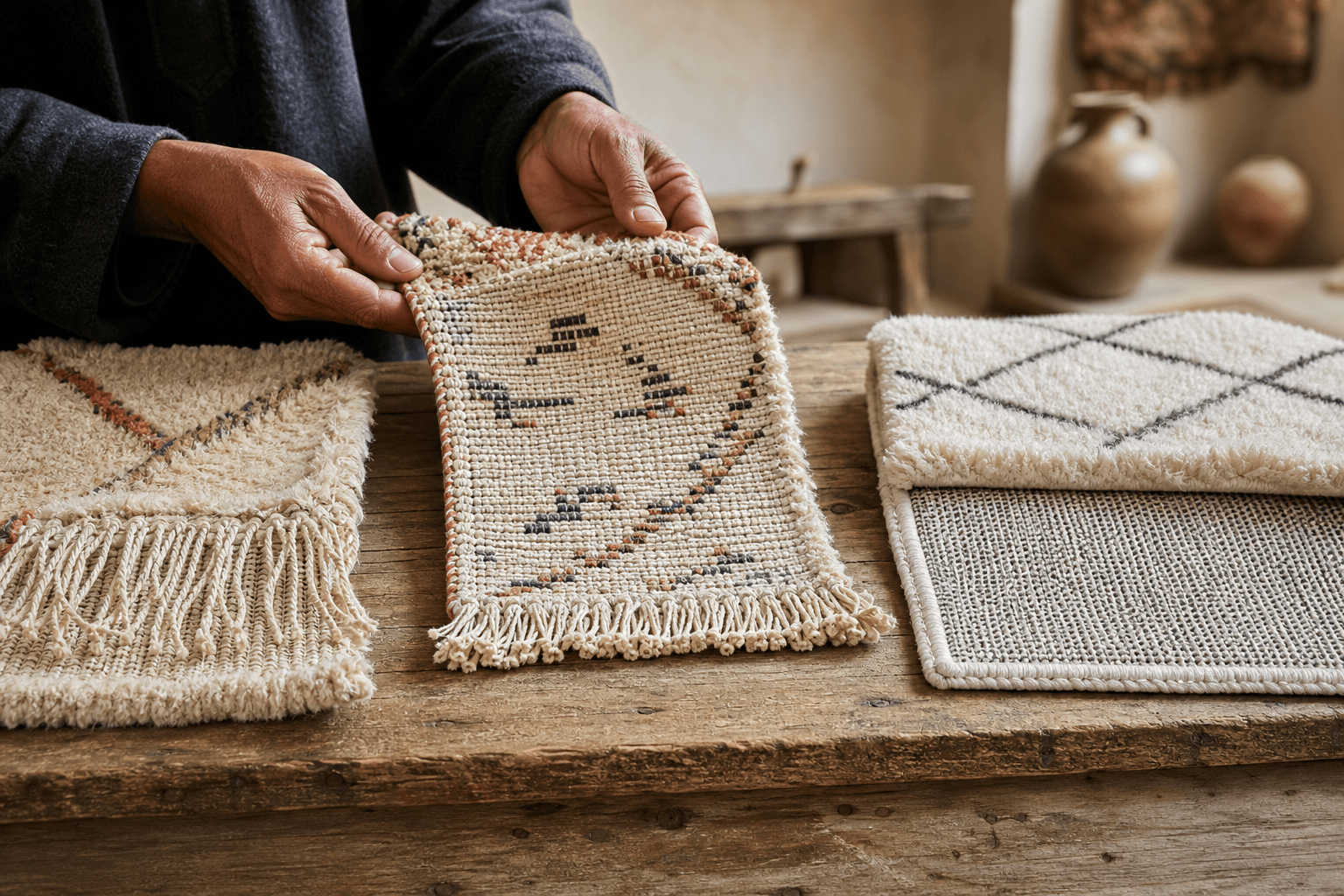
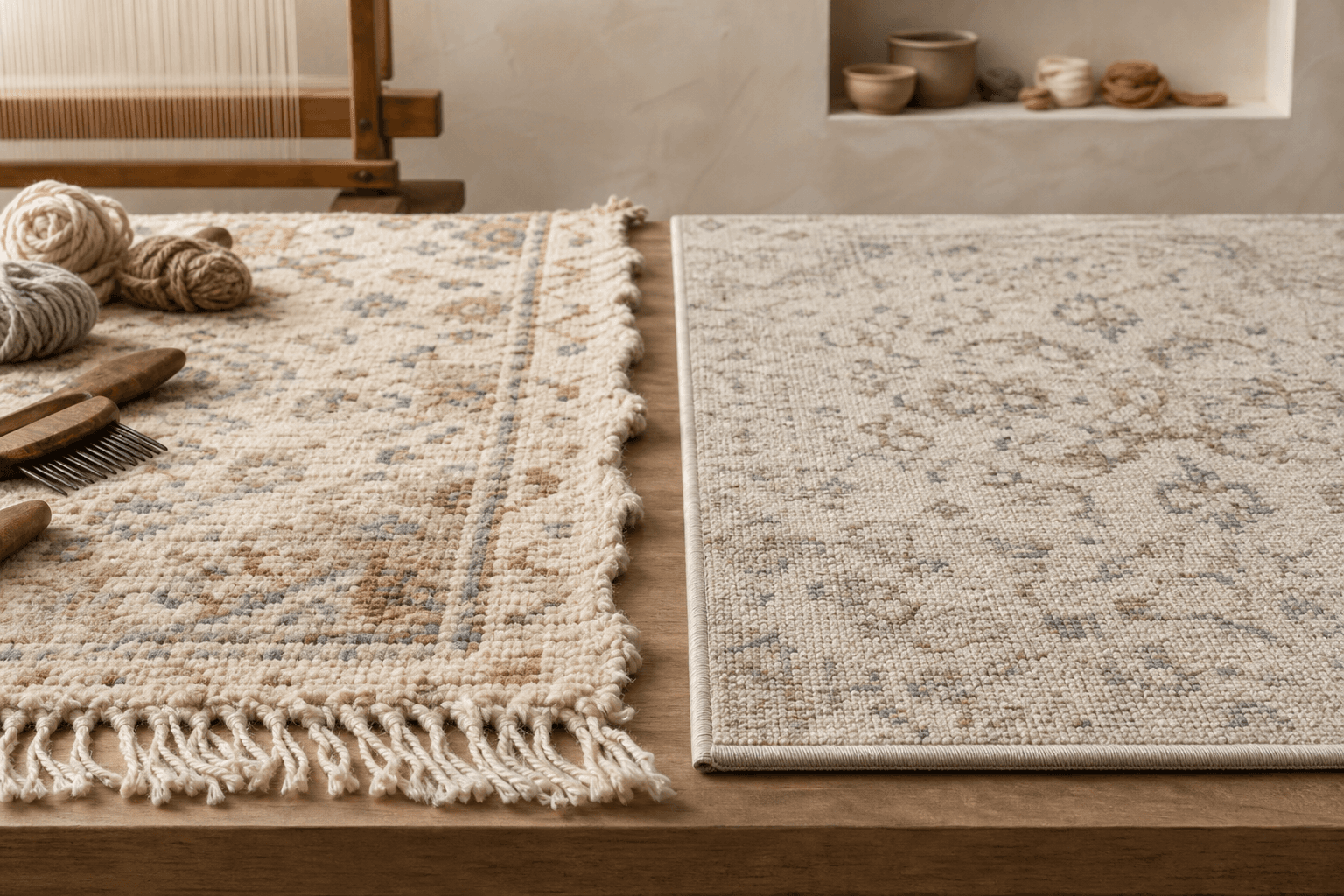
Compare like with like. A one-of-one hand-knotted high-pile wool rug is not directly comparable with a printed synthetic rug sold in repeat sizes, just as two hand-knotted rugs may differ in wool, foundation, labor, design complexity, condition, and service. The useful question is not “why is handmade expensive?” but “which verified qualities matter to me, and what am I paying to preserve?”
02 · Material
What does wool add to daily life?
Wool brings warmth, acoustic softness, resilient fiber, and a surface that changes under light. High pile can make a room feel quieter and more intimate; a lower pile supports easier movement beneath chairs. Natural variation gives color depth without a glossy printed surface. Those qualities are experienced through footsteps and furniture, not only through a close-up photograph.
Wool also asks for care. Grit should be removed with controlled suction; spills should be blotted promptly; direct sunlight and traffic may require rotation; full washing belongs with a specialist who understands loose-laid wool rugs and dye stability. If that routine feels unreasonable, do not buy on the hope that the material will behave like a machine-washable mat. Read the complete wool care guide before deciding.
03 · Longevity
Does handmade mean it will last longer?
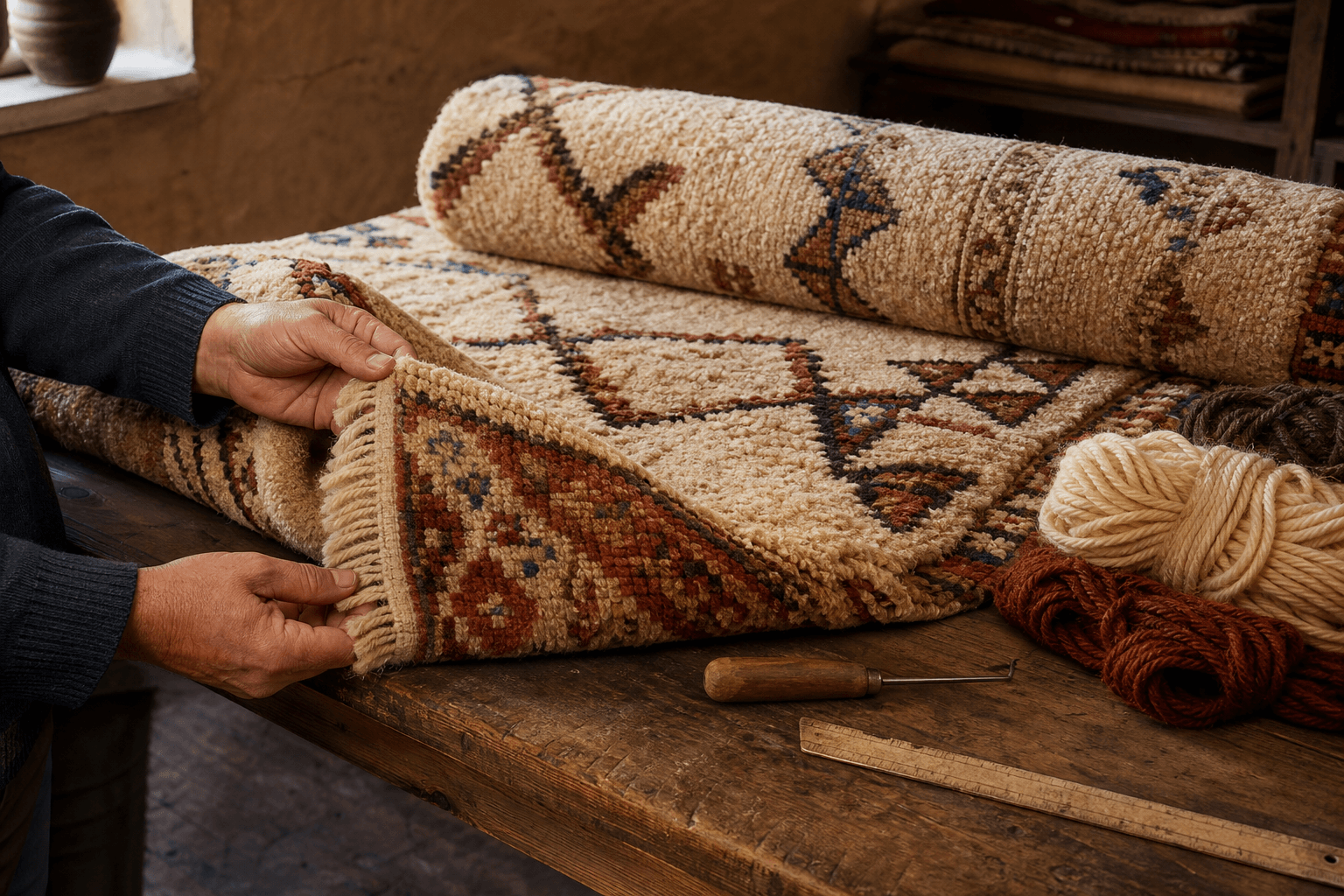
Not by label alone. Longevity depends on structure, fiber, foundation, finishing, traffic, pad, cleaning, spills, humidity, sun, and whether damage is addressed early. A well-made hand-knotted rug has an important advantage: specialists can often stabilize an edge, rebuild a small foundation area, or replace missing pile locally. Repairability can extend use, but every treatment still requires judgment and cost.
Ask for repairability before damage occurs. Who can clean the rug in your region? Can the seller provide construction and dye information to a specialist? Is the fringe structural or attached? What symptoms— powdering, loose backing, dye movement, exposed warps—should trigger professional attention? A permanent object needs a permanent record.
Use cost per year carefully
A simple planning formula can clarify priorities: purchase price plus expected care and repair, divided by years of actual use. It is not a promise of lifespan or resale. The calculation only helps compare a rug you would willingly maintain and keep with one you expect to replace. Emotional value, rarity, and design cannot be reduced to the formula, but they should not be used to hide poor fit or unclear construction either.
04 · Fit
When is a handmade wool rug worth it?
| Worth considering when… | Choose another construction when… |
|---|---|
| You want a one-of-one object and accept small human variation | You need an exact repeat or matching set |
| Natural wool feel and changing pile matter | Machine washing or water resistance leads the decision |
| You intend to use and maintain the rug for years | You need the lowest initial price or easy replacement |
| Documented origin and making carry value for you | The seller cannot verify material, technique, or origin |
| Specialist cleaning and local repair are available | Your household cannot support the required care |
“Investment rug” is often used too loosely. Do not assume financial appreciation or resale. Buy a rug first for use, material, design, and documented origin. If resale matters, research the specific market, maker, age, condition, provenance, and comparable sales rather than relying on the word “heirloom.” A future heirloom is created by care, memory, and continuity; it is not guaranteed by marketing.
05 · Decision
Make the purchase answer five realities
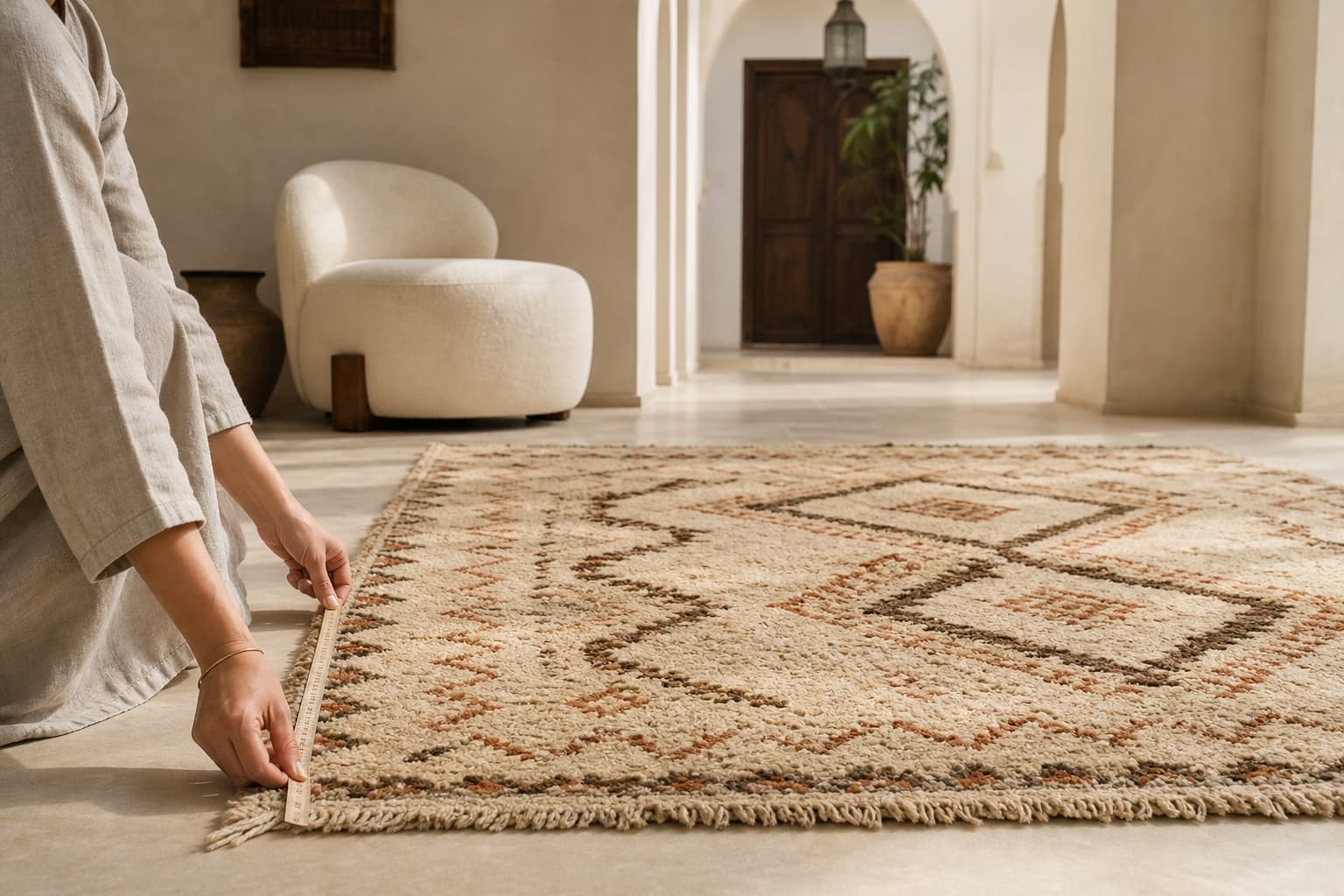
- The room.The exact dimensions connect the furniture and clear the doors.
- The household.Traffic, pets, children, light, and cleaning habits suit wool and pile.
- The record.Material, construction, origin, condition, and terms are written down.
- The service.Delivery, returns, care guidance, and specialist cleaning are realistic.
- The attachment.You would still want the object after the trend or room styling changes.
If all five answers are strong, the value can extend far beyond the first impression. If one answer fails, pause. The most expensive mistake is not choosing machine-made; it is buying a beautiful object that never truly belongs to your room or life.
06 · Alternatives
What should you buy when handmade wool is not the answer?
A washable rug can be the better choice in a nursery, mudroom, kitchen-adjacent dining area, or home managing frequent pet accidents. Verify machine capacity, drying requirements, backing compatibility, and whether the entire stated size is genuinely washable at home. Washability is a performance feature, not an aesthetic failure.
A low-pile machine-woven rug can support rolling chairs, low doors, high traffic, and projects requiring exact repeated sizes. Choose fibers and backing appropriate to the floor, review edge construction, and ask how the rug is cleaned at the end of a heavy season. If a replacement will be easier than repair, include that reality in the environmental and financial comparison.
A flatwoven wool or cotton rug offers natural material with less pile, easier chair movement, and a compact visual plane. It may need more effective grip and can show creases differently. Flatweave is not a lesser version of knotted pile; it is another structure with its own strengths, traditions, and care.
Consider vintage with condition expertise
A vintage rug can bring genuine age, softened color, and existing repair history, but it requires a condition record. Ask about moth activity, odor, previous washing, foundation wear, dye movement, repairs, reductions, and whether the edges remain stable. “Vintage” is not proof of quality, and age should never hide damage that changes use or value.
Wait rather than rationalize
If the exact handmade rug strains the budget, does not fit, or lacks a trustworthy record, waiting is a valid option. Mark the desired dimensions, save the material brief, and continue looking. Buying a substitute you already resent or a costly object you cannot comfortably use creates more waste than a deliberate pause.
Worth is not a contest between purity and practicality. The most responsible object is one that fits its zone, receives appropriate care, and remains wanted after novelty fades—whatever its construction.
If you are commissioning a custom rug, ask who approves the drawing, whether a yarn sample is supplied, how handmade variation is defined, what dimensional tolerance is accepted, and what happens if the finished piece differs from the approved sample. Custom does not eliminate risk; it makes a written brief more important.
For a ready-made one-of-one piece, verify that every photograph shows the same object. Compare motif placement, fringe, small marks, and dimensions across studio and room views. You should receive the rug you evaluated, not another item described as equivalent.
Give yourself a cooling-off period after the room test. Revisit the exact images, written specification, and full cost without the sales page open. If the desire depends on urgency, scarcity language, or an imagined future room rather than the measured space, wait. Lasting value begins with a decision that remains convincing after the immediate emotion settles.
That pause also gives you time to confirm cleaning access, delivery logistics, and the return terms in writing.
The value principle