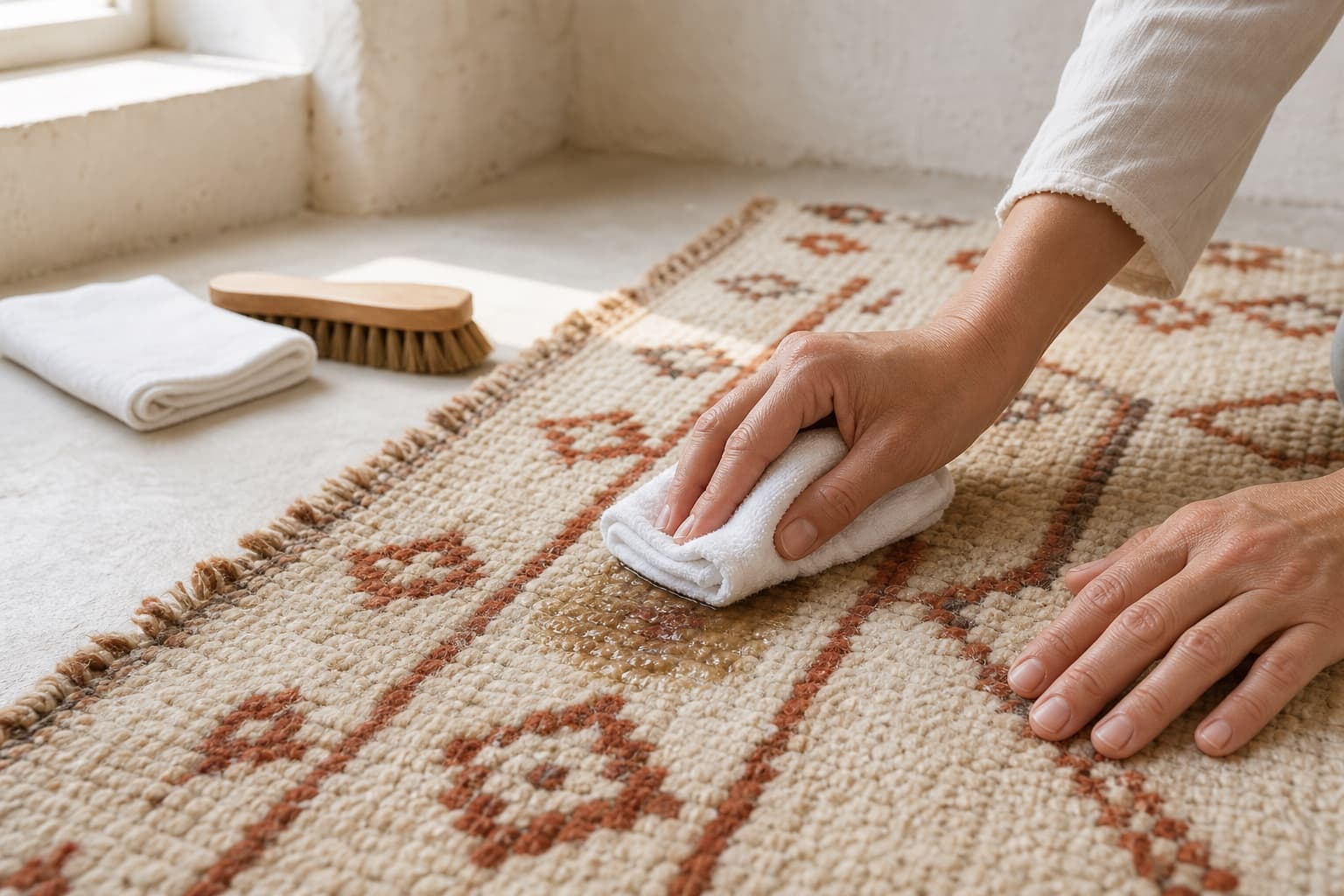
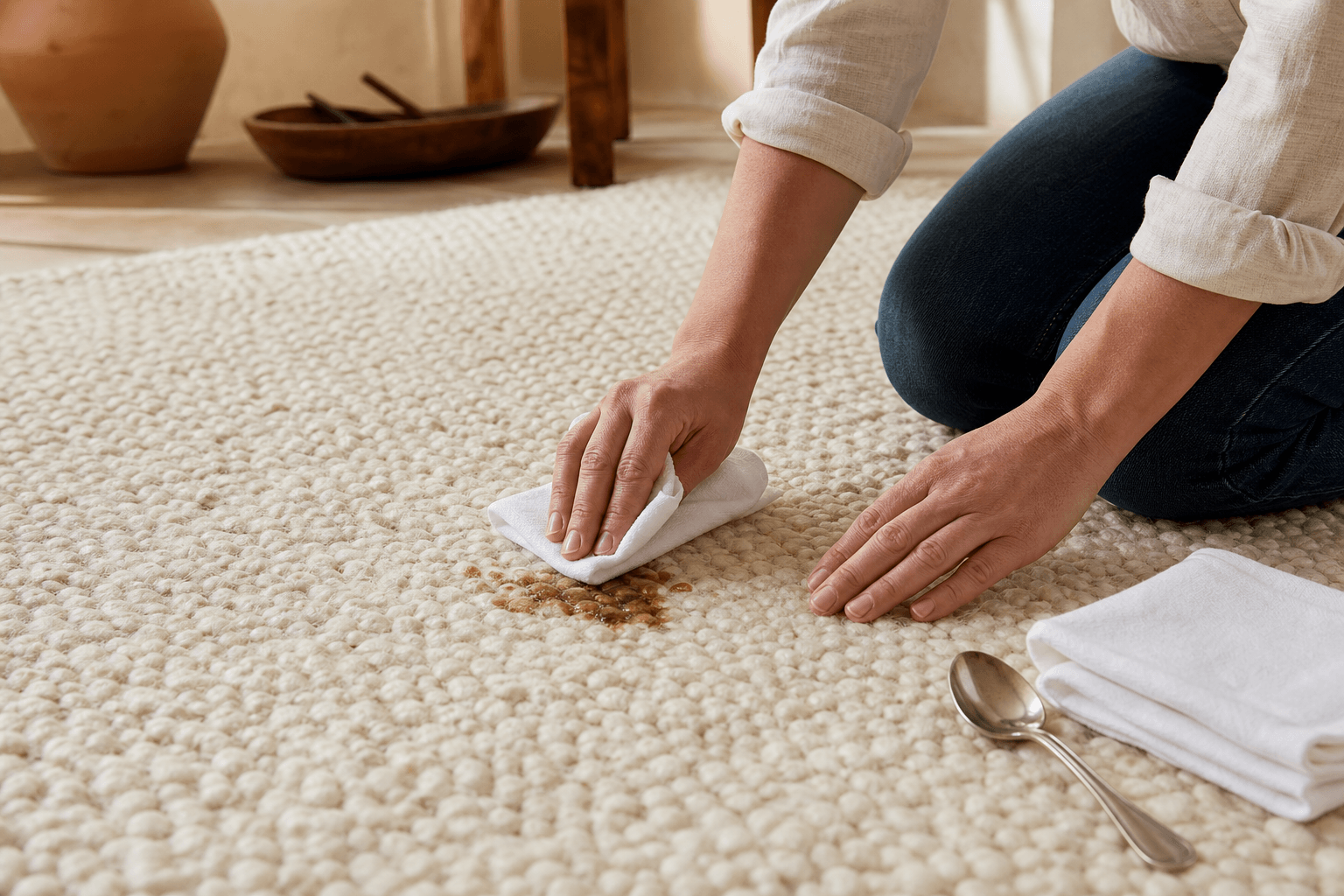
For a fresh spill on a wool rug, remove solids without pressing, blot liquid with clean white absorbent cloths, work from the outside toward the center, and avoid scrubbing or saturation. Do not apply a household chemical simply because it is popular online. The correct treatment depends on the spill, dye stability, construction, and any previous cleaning.
The first five minutes
Lift. Blot. Stop before guessing.
Remove solids with a spoon or dull edge, press white towels into the moisture, replace them as they absorb liquid, and contact a qualified rug-care specialist early for dye, oil, urine, large spills, or color movement.01 · First response
What should you do immediately?
- Protect the area.Keep feet and pets away so the spill does not spread.
- Lift solids.Use a spoon or dull edge; work gently without forcing material into the pile.
- Blot liquid.Use dry white cloths and press; do not scrub back and forth.
- Work inward.Start at the edge to reduce the stain’s visible spread.
- Escalate early.Photograph the spill and call a specialist when the fiber, dye, or treatment is uncertain.
White cloth makes transferred color visible. If rug dye appears on the towel, stop adding moisture and seek professional advice. Place dry absorbent material above and, only when safely accessible, below the affected area without folding or straining the rug. Air movement can support drying, but avoid intense heat that may set residue or distort the foundation.
Keep the product record nearby. A cleaner needs to know whether the rug is hand-knotted or tufted, wool or a blend, backed or unbacked, naturally or synthetically dyed when known, and previously treated. The WoolSafe Organisation offers owner resources and directories for approved care specialists; local professional advice is especially important for handmade loose-laid rugs.
02 · Spill type
How does the first response change by spill?
| Spill | First action | Call early when… |
|---|---|---|
| Coffee or tea | Blot immediately with dry white cloths | Milk, sugar, large volume, or dye transfer is involved |
| Red wine | Blot; do not rub or flood | Color remains, rug dye moves, or foundation is wet |
| Food or sauce | Lift solids, then blot moisture | Oil, pigment, or particles remain deep in pile |
| Oil or grease | Lift excess without spreading | Avoid improvised solvents; specialist treatment is usually warranted |
| Mud | Remove excess and allow remaining soil to dry before gentle extraction | Contamination, odor, or deep saturation is present |
| Pet accident | Blot promptly and document the area | Urine reaches the foundation, odor persists, or accidents repeat |
A visible mark is only part of the problem. Liquid can travel along fiber and into the foundation beyond the surface boundary. Pet urine and sugary drinks can leave residue and odor below the pile; oil attracts soil; repeated wetting can move dyes. A home method that makes the face look lighter may not remove what remains inside the structure.
03 · Avoid
Which popular remedies can make things worse?
Do not reach automatically for bleach, strong alkaline cleaner, undiluted vinegar, ammonia, laundry detergent, dish soap, powder deodorizer, colored cloths, or a rental carpet machine. Chemistry that is safe on tile, synthetic upholstery, or wall-to-wall carpet may affect wool protein, dyes, backing, adhesive, or rinsing. Excess liquid can enlarge the problem and delay drying.
Baking soda is often recommended as a universal absorbent, but powder can settle deep in high pile and prove difficult to remove. Steam cleaners and extraction machines can apply more water and heat than the rug can safely manage. Scrubbing fuzzes wool, distorts pile, and pushes material outward. Fragrance can mask odor without removing contamination.
A WoolSafe-approved product may be appropriate when its label, rug specification, and a hidden-area test all support use. “Approved” is not permission to improvise concentration or saturate the foundation. If the rug is valuable, handmade, naturally dyed, antique, or structurally uncertain, contact a specialist before adding a treatment that must later be removed.
04 · Specialist care
When should you stop and call a professional?
- The spill is large, hot, oily, strongly colored, unknown, or biologically contaminated.
- Color transfers to the towel, a ring expands, or the rug develops rippling.
- Moisture reaches the foundation, backing, pad, or floor beneath.
- Odor persists after the surface appears dry.
- The rug is antique, high-value, hand-knotted, hand-tufted with aging backing, or previously repaired.
Choose a cleaner experienced with loose-laid handmade wool rugs, not only installed carpet. Ask how they test dye stability, identify fiber and construction, control drying, handle fringes, and document existing damage. Describe every product already applied. Withholding a failed home treatment makes diagnosis harder.
Keep photographs before, during, and after treatment, plus the purchase record and any care instructions. If the event may involve insurance, shipping damage, or a warranty, notify the relevant party before altering the evidence beyond necessary first aid.
05 · Prevention
Prepare before the next spill
Store clean white cotton cloths, a spoon, disposable gloves, the rug’s care record, and the contact details for a qualified local cleaner in one place. Use a compatible pad so the rug does not slide during blotting. Rotate dining and living-room rugs so one edge does not receive every spill and footstep.
Place high-risk activities with intention. A lower pile or washable construction may be more practical under a child’s art table, at an exterior door, or where repeated pet accidents occur. A handmade high-pile wool rug can still belong in a lived-in home, but the room and routine should respect its material. Prevention is a design decision, not a demand for perfect behavior.
This guide covers conservative first response, not a universal stain-removal recipe. Continue with the full wool rug care routine for vacuuming, rotation, pads, pets, professional cleaning, and storage.
06 · Follow-up
What should you watch after the surface looks clean?
A stain can reappear as the rug dries because residue travels upward with moisture. This “wicking” effect does not mean the spill returned; it means material remained below the visible pile. Do not repeat aggressive wet treatment each time a ring appears. Photograph the change, keep traffic off the area, and ask a specialist how to address the foundation and drying process.
Check the floor and pad beneath only if the rug can be lifted safely without folding a wet structure. Moisture trapped against timber can affect the finish; moisture inside a pad can prolong odor and drying. Replace or professionally clean a contaminated pad as advised. Never place a rug back over a damp floor simply because the pile feels dry.
Watch for color and texture change
Compare the area under neutral daylight. Dye movement may appear as a halo or transfer between adjacent colors. Scrubbing can make wool look lighter through fuzzing even when pigment remains. Heat or saturation may create rippling, stiffness, or a tide line. Record changes before grooming, trimming, or applying another product.
Watch for odor after complete drying
Fragrance and surface treatment can temporarily mask pet urine, food, milk, or microbial odor. If smell returns in humid weather or after the room warms, contamination may remain in the foundation, backing, pad, or floor. Repeated perfume and enzyme use without a construction diagnosis can complicate professional treatment.
Update the rug’s care record
Write the date, spill type, location, first response, every product applied, cleaner, treatment, and outcome. Photograph the rug after it is fully dry. This history helps future cleaners avoid incompatible chemistry and gives a buyer, appraiser, or insurer transparent information if the rug later changes hands.
Once stable, resume gentle maintenance rather than trying to make one area “extra clean.” Uneven cleaning can create contrast with the surrounding pile. Rotate the rug when appropriate and follow the cleaner’s waiting period before vacuuming the treated section.
Review the area again after a week and after the next humid day. Note any returning ring, odor, stiffness, color shift, or unusual shedding. Delayed observation is part of first aid because a foundation can remain affected after the face appears normal. Early documentation gives a cleaner better evidence than a description made months later.
Do not interpret ordinary early wool shedding as proof that the treated area is damaged, but compare it with the surrounding surface. Sudden baldness, exposed foundation, persistent heavy fiber loss, or powder from a backing needs professional attention. Trim only a clearly loose end level with the pile; never pull a yarn to see where it leads.
The spill principle